
By Craig Weeks
Founder, Chief Technical Designer · Updated November 05, 2026
Fire crews, forecasters and insurers use a vocabulary most homeowners never learn. Knowing a few of these terms makes fire news, warnings and your own assessment report much easier to follow. Definitions are written by Wetline's team, with official sources linked where we quote them.
Fire danger
Burning Index (BI)
A daily fire danger rating from the National Fire Danger Rating System. It rates how hard a fire would be to control, and it is related to potential flame length in feet multiplied by 10 (US Forest Service). See our full Burning Index guide.
Energy Release Component (ERC)
One of the two building blocks of the Burning Index: how much heat a fire would produce. It rises as vegetation dries out over weeks of dry weather.
Spread Component (SC)
The other building block of the Burning Index: how fast a fire would spread. Wind and dry flashy fuels push it up quickly.
National Fire Danger Rating System (NFDRS)
The system US fire agencies use to rate fire danger every day from weather station data. The Burning Index, Energy Release Component and Spread Component all come from it.
Red flag warning
A warning from the National Weather Service that critical fire weather (strong wind, low humidity and dry conditions) is happening or about to happen. On these days, any fire can spread fast.
Fire weather watch
An earlier alert from the National Weather Service that red flag conditions may develop, usually a day or two ahead.
Fuels
Flashy fuels
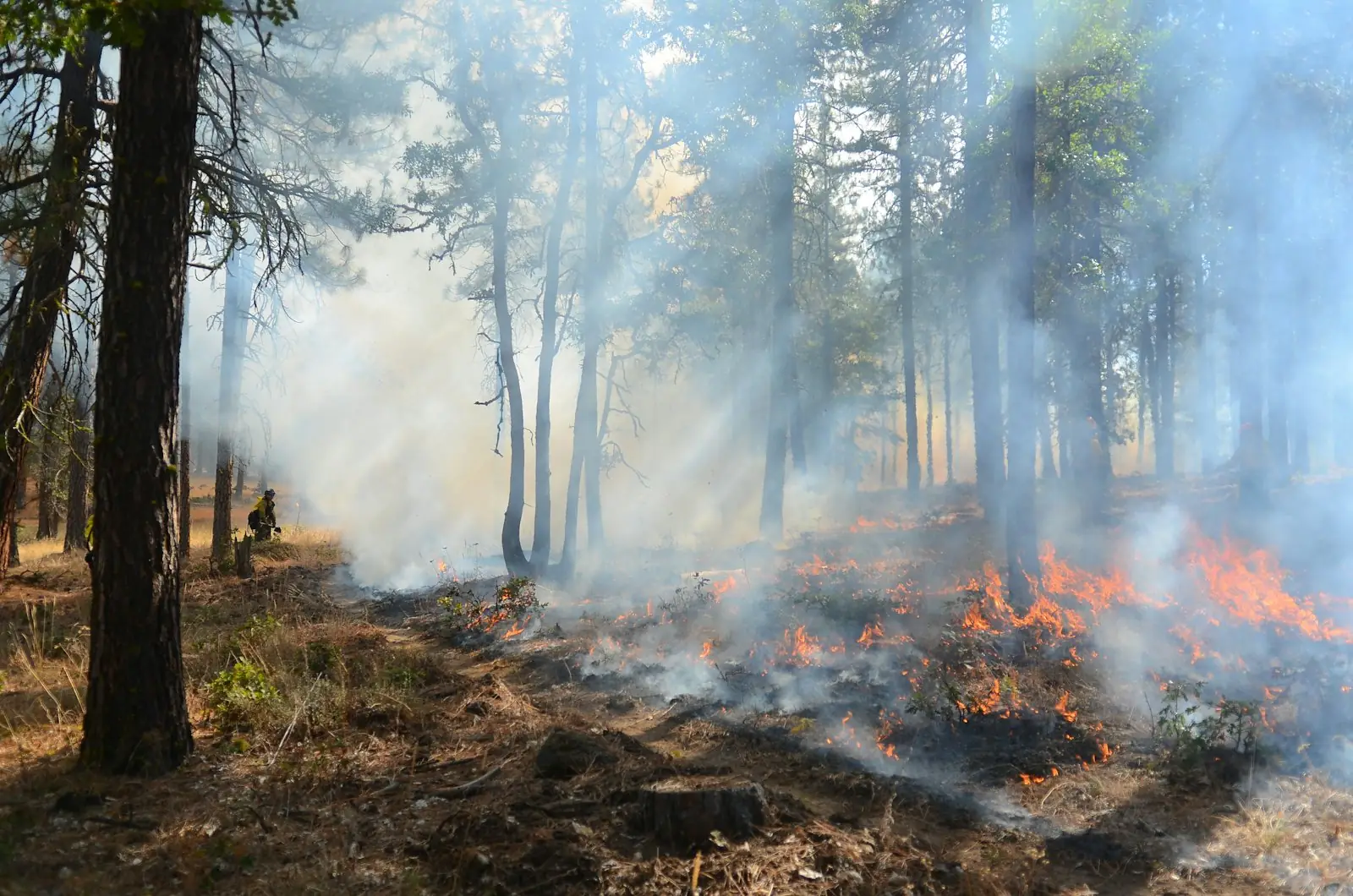
Fine, dry material less than a quarter inch in diameter, such as dry grass, dead leaves, pine needles and small twigs. They ignite easily, burn quickly and are where embers usually start fires around homes. Also called light or fine fuels (NWCG). See our flashy fuels guide.
1-hour, 10-hour, 100-hour and 1,000-hour fuels
Fuel size classes named for how long they take to dry out or soak up moisture to match the air. 1-hour fuels are under a quarter inch, 10-hour fuels are a quarter inch to an inch, 100-hour fuels are one to three inches, and 1,000-hour fuels are three to eight inches. Small fuels light first and ignite the larger ones.
Fuel moisture
How much water is in vegetation. Fire agencies measure it daily; the drier the fuel, the more easily it burns.
How homes catch fire
Ember
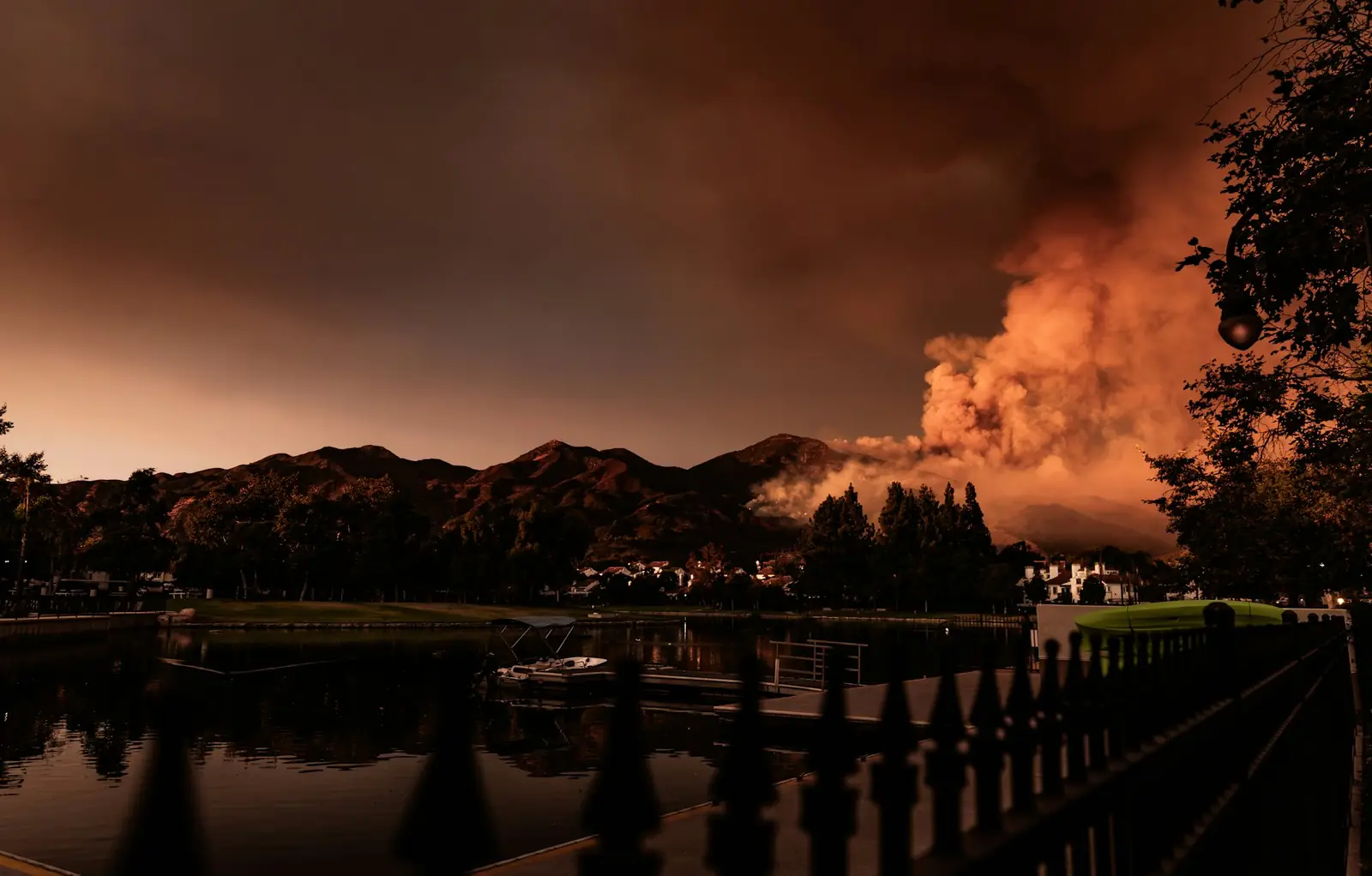
A burning piece of bark, leaf or debris carried by the wind, sometimes a mile or more ahead of a fire. Embers cause up to 90 percent of home ignitions (IBHS). See how embers burn homes.
Radiant heat
Heat that travels through the air from a nearby fire. It can break windows and ignite surfaces without direct flame contact. Window laminates help glass hold up against it.
Home hardening
Upgrading a home's materials and openings so embers and heat are less likely to ignite it, such as ember-resistant vents, gutter guards and fire-resistant coatings. See what home hardening is.
Around your property
Defensible space
The area around a home where vegetation is managed to slow fire and give firefighters room to work. California law requires up to 100 feet. See defensible space zones.
Five-foot zone (Zone 0)
The first five feet around a home, where nothing combustible should sit. See our five-foot zone guide.
Fire hazard severity zone
CAL FIRE's map ratings of wildfire hazard: Moderate, High or Very High. Your zone affects building codes and inspections.
During a fire
Containment
The share of a fire's edge that crews have under control, shown as a percentage. A fire can be 0 percent contained and still be small.
Evacuation warning
A notice that there is a potential threat. Get ready, and leave now if you need extra time.
Evacuation order
A notice that there is an immediate threat. Leave now.
Want these terms applied to your own home? A Wetline firefighter's free assessment shows your fire hazard zone, your flashy fuels and what each hardening layer would change. Book a free assessment.