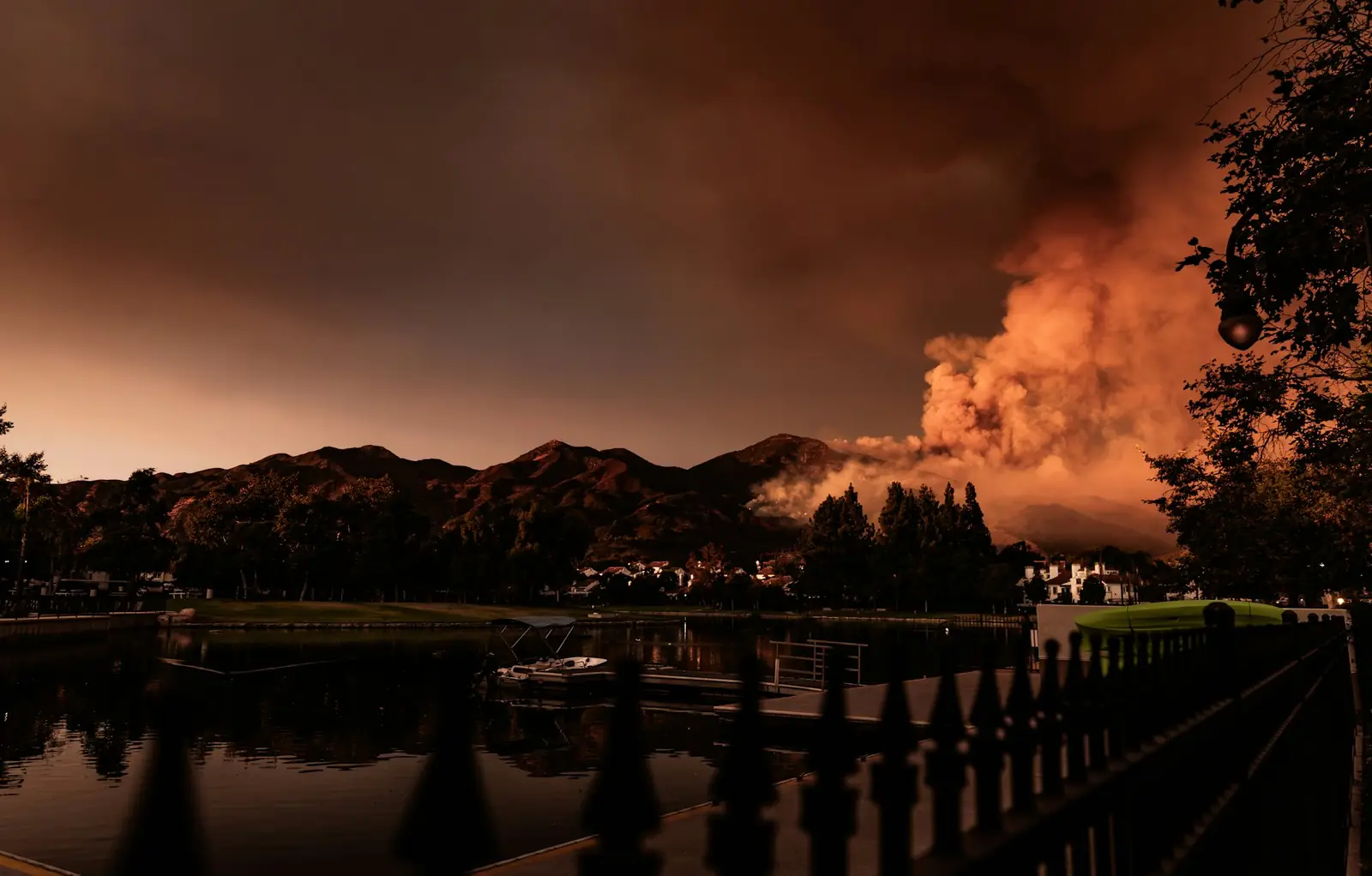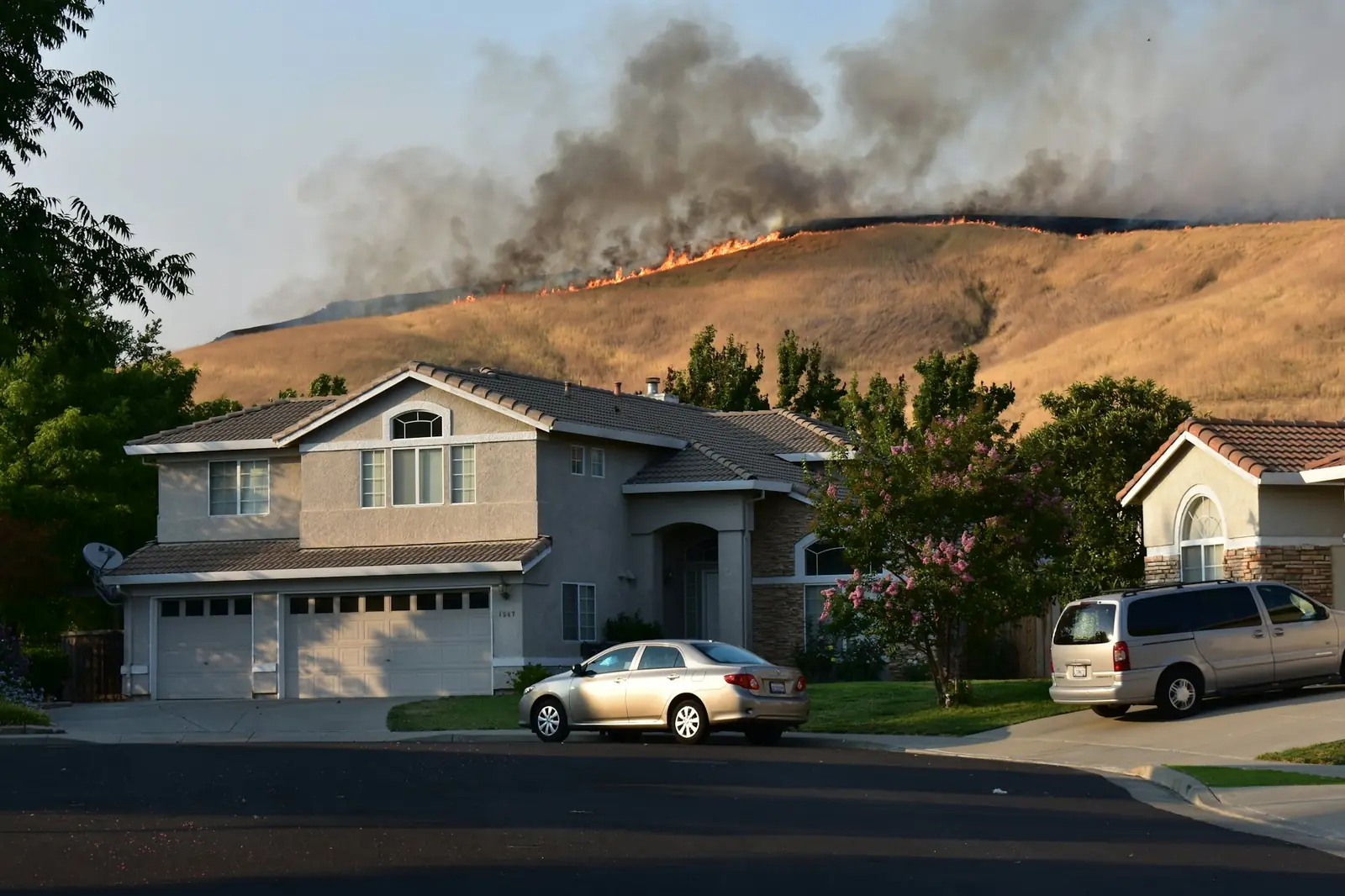
When people picture a home burning in a wildfire, they imagine a wall of flame rolling over it. That does happen. But fire researchers and firefighters agree on something that surprises most homeowners: many homes ignite from embers, often long after the main fire has passed.
What an ember attack looks like
In a wind-driven fire, burning bark, leaves and debris are lofted into the air and carried ahead of the fire front. Embers can travel a mile or more. They arrive in waves, sometimes for hours, landing on roofs, decks and yards.
Each ember is small. The danger is volume and persistence. Thousands of embers find every weak point a house has.
The five ways embers get in
- Vents. Attic, soffit, gable and foundation vents pull air in, and embers with it. Inside, they land on dust, insulation and framing.
- Gutters and roof valleys. Dry leaves and pine needles become a line of kindling along the roof edge.
- The five-foot zone. Bark mulch, wood fences, dry shrubs and doormats against the house catch embers and put flames right against the siding.
- Decks and the spaces under them. Debris collects under decks, and wood decking itself can ignite.
- Broken glass. Radiant heat cracks windows, and embers enter directly.
Why homes burn after the front passes
Firefighters prioritize life safety and can't stay at every house. A small ember fire in a gutter or attic can smolder unseen, then spread once crews have moved on. By the time anyone notices, it's too late.
This is also why house-to-house spread is so destructive in dense neighborhoods. One home ignites from embers, and its radiant heat and embers ignite the next.
What stops embers
The good news is that ember defense is practical and affordable compared to rebuilding:
- Ember-resistant vents with 1/16 to 1/8 inch metal mesh
- Noncombustible gutter covers and regular roof cleaning
- A clean five-foot zone and pre-treatment of plants and fences
- Window laminates to keep glass intact
- Intumescent coatings on wood siding, eaves and decks
- An autonomous sprinkler system to keep surfaces wet through hours of ember fall
The fire front is a moment. The ember storm can last for hours. Defense has to last that long too.
The bottom line
Protecting a home from wildfire is mostly about closing the openings and removing the fuel embers need. Each layer of defense blocks a different path. Together, they give a house a real chance.
See how the six layers work together on our services page.
Frequently asked questions
How far can wildfire embers travel?
On strong winds, embers can travel a mile or more ahead of a fire front.
What is the most common way embers enter a home?
Vents are one of the most common entry points, along with gutters full of debris and combustible material against the walls.
Can a home survive a wildfire without firefighters?
Many do. Homes with hardened vents, clean roofs, protected glass and a clear five-foot zone have much better odds, especially when no one is there to put out spot fires.