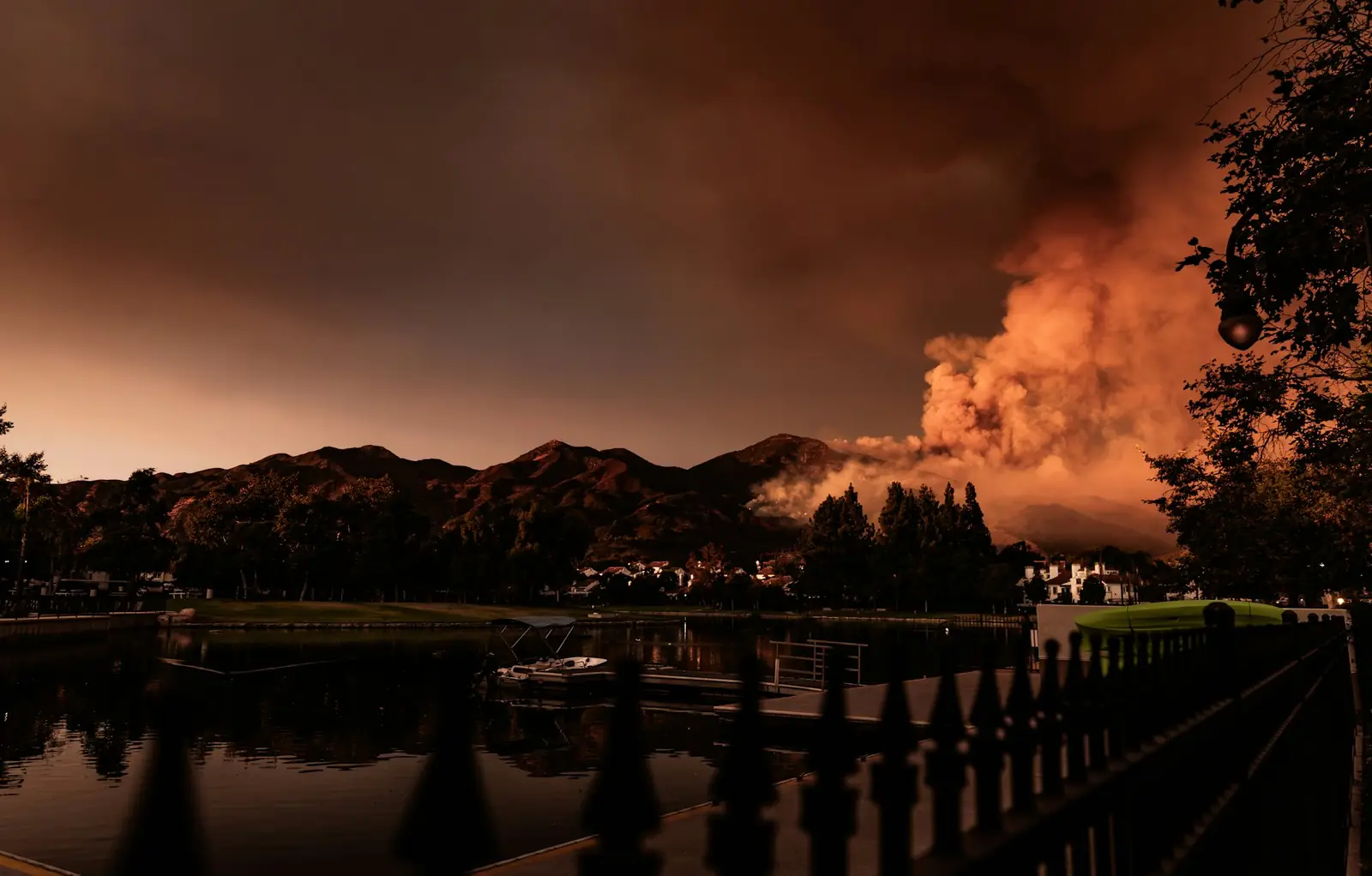
A Nevada law that took effect on January 1, 2026 lets home insurers exclude wildfire from standard homeowners policies. State officials say no carrier has gone that route yet, but the law is worth understanding, especially if you live in Reno, Carson City, Incline Village or Stateline. This guide explains what changed, what has and has not happened, and what to check on your own policy.
What Nevada's AB 376 actually changed
Assembly Bill 376 passed the Nevada Legislature in June 2025 and was signed by Gov. Joe Lombardo. It took effect January 1, 2026. Reporting from Insurance Business describes Nevada as the first state to give insurers explicit legal authority to remove wildfire from standard homeowners coverage. An insurer can carve wildfire out and sell it as a separate, standalone product, or exclude it with nothing offered in its place.
The law also defines the term. Under the change to Chapter 691A of Nevada Revised Statutes, a wildfire is an unplanned or uncontrolled fire in an area of combustible vegetation that started outside the residential or commercial property, according to the Tahoe Daily Tribune. The same law lets an insurer use a different definition if the insurance commissioner allows it. That matters, because a fire that starts at a neighboring house and spreads to the brush, as happened in the 2025 Conner Fire in Douglas County, may not fit a narrow definition the same way a lightning fire would.
Supporters see it as a way to keep carriers writing policies in the state. The Insurance Business report describes the law as a four-year regulatory sandbox meant to slow the wave of wildfire-related non-renewals. Critics worry that homeowners may not notice a change in coverage, or may not be able to afford a separate wildfire policy.
What has happened so far
In short, the standard policy has not changed yet. Nevada Insurance Commissioner Ned Gaines said in local news interviews that no company had submitted a filing to remove wildfire coverage from homeowners policies. Nevada Division of Insurance spokesman Drew Pearson told the Tahoe Daily Tribune that an insurer cannot make that change unilaterally. It would have to file new forms and rates for review and approval before removing wildfire as a covered peril.
Gaines also told the Nevada Independent that if a carrier carves out wildfire, it would have to do so for the entire state. A KOLO report from August 2026 said that, as of that month, no insurers in the Northern Nevada area had requested exemptions. We could not find reporting of a filing since then, so check the Nevada Division of Insurance directly for the latest.
The more immediate problem, according to Gaines, is getting a policy in the first place. He said the bigger challenge facing many Northern Nevada homeowners is finding a company willing to write a new policy. One buyer interviewed by local TV said an agent's system returned 11 carriers that would not write a policy because of wildfire risk.
The numbers behind that concern come from the Division. In 2023, 481 homeowners policies were canceled or non-renewed because of wildfire risk, an 82% increase over the prior year. In the same year, 4,994 applications were declined for wildfire reasons. The Division's 2025 reporting named Incline Village and Stateline among the higher-risk areas where insurers were declining to write or renew. Those figures are a few years old now, and the Division has said it is gathering data on 2024 and 2025.
Why there is no safety net
California has the FAIR Plan as an insurer of last resort (see our comparison of the FAIR Plan and a standard policy for how that works across the border). Nevada does not. A bill for a state-run program died in the same legislative session that passed AB 376, according to Carson Now's coverage. That proposal would have offered minimal coverage to homeowners denied by three standard insurers, and would have required them to carry out wildfire protection measures.
That gap is why the Nevada market feels different from California's. If a carrier declines you, your options are other private carriers, often through an independent agent, rather than a state pool. Our overview of Nevada and Lake Tahoe insurance options covers the practical routes.
What regulators say about mitigation
There is some good news for homeowners who have done the work. Commissioner Gaines said homeowners who have completed wildfire mitigation and are not in high-risk areas can file a complaint with the Division if they believe they were unfairly denied coverage. He also said some insurers may be overestimating wildfire risk in parts of Nevada. His words: "It's never going to be zero, but you should still be able to get a policy."
The Division has also set conditions on risk scoring. A disclosure the Division required from the risk-model vendor Precisely says insurers using its model must tell policyholders their score and how it may affect rating. It also says insurers may not use the model output as the sole reason to deny, cancel or non-renew a policy. The same document says the model does not account for mitigation, so insurers may need onsite inspections to verify work done on a property.
Separately, a 2021 law led the Division to publish a voluntary wildfire mitigation incentive program in 2022. Insurers may adopt it through an expedited approval process. Whether your carrier has done so, and what it recognizes, is a question for the carrier. Your carrier sets final pricing, and doing mitigation work does not guarantee a discount or a renewal.
What this means for your home
None of this requires panic. It does reward paperwork and preparation. Here is a practical order of operations.
- Read your declarations page and renewal notice. Look for any language that mentions wildfire, a new endorsement or a changed definition. Ask your agent in writing whether wildfire is covered under your policy today.
- Ask for your risk score and the correction process. If your carrier uses a wildfire score, you are entitled to know it under the Division's disclosure terms. Ask what inputs drove it and how to correct errors.
- Build a home inventory. The Nevada Division of Insurance recommends one, both to choose the right coverage and to speed a claim after a loss.
- Document your mitigation. Date-stamped photos, contractor invoices and a written scope of work are what an underwriter or inspector can actually verify. Our free home hardening assessment produces a written record of your home's condition and the work done.
- Start with the first five feet. Truckee Meadows Fire Protection District advises a non-combustible area from zero to five feet from the house, free of shrubs, needles and firewood. Then look at ember entry points such as vents and gutters. Our guide to the five-foot zone walks through it.
- Know your local district. In the Tahoe basin, requirements run through the fire district. See our page for Incline Village homeowners, and keep in mind that an HOA may also have its own rules.
- Shopping or buying? Get a bindable quote on the specific address before your contingencies expire, not after. Use our Find Savings tool to see which documented upgrades carriers commonly ask about, and remember that your carrier sets final pricing.
- Keep the complaint route in mind. If you have documented mitigation and are denied or non-renewed, you can contact the Division of Insurance. The Division also asked insurers to show flexibility on premium payments for policyholders affected by this summer's northern Nevada fires, including the Hawk Fire near Reno, in Bulletin 26-003. Our thoughts are with those households as they rebuild.
Wetline is not an insurance agent or law firm, so we cannot advise on coverage or file complaints for you. We can help you harden the home and document it. Call 310-569-4523 or start with the assessment above.
Frequently asked questions
Does my Nevada homeowners policy still cover wildfire?
As far as state officials have reported, yes. Commissioner Gaines said no insurer had filed to remove wildfire coverage, and any carrier that wants to do so needs Division approval first. Still, read your renewal documents each year and ask your agent to confirm in writing.
Can my insurer drop wildfire coverage mid-policy?
Not on its own. The Division has said an insurer would need to submit form and rate filings for review and approval before removing wildfire as a covered peril. Ask your agent how any approved change would apply at your renewal.
Does home hardening help if I am declined in Nevada?
It can help your case, but there are no guarantees. Regulators say mitigation should be considered, and risk scores should not be the sole reason for a denial or non-renewal. Documented work gives you something concrete to show an agent, an underwriter or the Division. Your carrier sets final pricing and underwriting decisions.
Sources
- Insurance carriers can now carve out wildfire coverage from Nevada homeowner policies (Carson Now)
- New law allows insurers to exclude wildfire from policies (Tahoe Daily Tribune)
- Nevada law allows insurers to exclude wildfire coverage (Fox Reno)
- Nevada law could let insurers exclude wildfires from coverage (KOLO)
- Reno wildfire hits Nevada homes under its brand-new wildfire exclusion law (Insurance Business)
- Home insurer skittishness on wildfire risk a growing issue for Nevada
- Nevada's New Wildfire Law Signals a Shift in Property Insurance Risk Allocation (United Policyholders)
- Wildfire Risk - Nevada Division of Insurance Disclosure (01-2025)
- Nevada Personal-Lines Property Insurance Wildfire Mitigation Incentive Program (Nevada Division of Insurance)
- Nevada Division of Insurance Issues Guidance for Nevadans Affected by Wildfires (August 11, 2026)
- Nevada: DOI Bulletin Requests Flexibility for Policyholders Impacted by Wildfires (NAMIC)
- Wildland Fire Education (Truckee Meadows Fire District)
This article is general information, not insurance or legal advice. Your carrier sets final pricing and eligibility.