
By Craig Weeks
Founder, Chief Technical Designer · Updated November 14, 2026
Vents are small openings, but they are one of the easiest ways for wind-blown embers to reach the inside of a house. In 2026 California moved its wildfire construction rules into a new code, so a lot of the vent advice you find online now points to a chapter that no longer exists. This guide explains what the code says, what it means if you own an existing home, and how vents show up in insurance programs.
Chapter 7A is gone, but the rules did not disappear
For years, homeowners and contractors in fire country talked about "Chapter 7A" of the California Building Code. That language is now out of date. According to the Building Standards Commission, the new California Wildland-Urban Interface Code was created by relocating material from several parts of Title 24, including Chapter 7A of the Building Code, Section R337 of the Residential Code and Chapter 49 of the Fire Code. The state's code listing shows the 2025 edition of that code, Title 24, Part 7, took effect on January 1, 2026.
The practical takeaway is that the vent rules were consolidated, not dropped. If a contractor, inspector or insurance form still says "7A," they usually mean the wildfire construction requirements, which now live in Part 7. When you get a quote or a permit, ask which section of the current code the vent work is meant to satisfy.
What the code expects from vents on new construction and rebuilds
The wildfire building code is written mainly for new buildings in the wildland-urban interface and fire hazard severity zones. For vents, the approach carried over from the earlier code is a test-based one. Under the earlier Chapter 7A, the State Fire Marshal explained that vents in these areas had to be listed to the ASTM E2886 test, either by the State Fire Marshal or by an approved laboratory. The test looks at three things: no flaming ignition during the ember test, no flaming ignition during the flame integrity test, and a limit on how hot the back side of the vent gets. Summaries of the new Part 7 describe the same basic approach for eave, soffit, gable and foundation vents.
There is one wrinkle worth knowing. The Fire Marshal has stated that the ASTM E2886 test does not cover vents installed on a sloped roof, including dormer, ridge and off-ridge vents. Those vents are generally handled through the mesh route instead: noncombustible, corrosion-resistant metal mesh with openings between 1/16 and 1/8 inch. So if you cannot find your ridge vent in the State Fire Marshal's listings, that does not mean it is noncompliant.
If you are rebuilding after the Palisades or Eaton fires, your plans will be reviewed against the current code, and the vent schedule is something to check early. Our guide to rebuilding after the Palisades and Eaton fires covers how to build hardening into the project from day one.
What applies if you already own the house
Here is where many homeowners get confused. The code is aimed at new construction, and CAL FIRE frames vent upgrades for existing homes as hardening advice rather than a blanket retrofit mandate. Its public guidance tells homeowners to install 1/16-inch to 1/8-inch noncombustible, corrosion-resistant metal mesh over vents and to avoid fiberglass or plastic mesh, which can melt. It then says it is recommended to replace vents with State Fire Marshal-approved flame and ember-resistant vents for enhanced protection.
That said, rules can change when you do work on the house. Replacing vents during a remodel, re-roof or repair may bring them under current requirements, and local fire districts and HOAs can add their own expectations. Your local building department can tell you what applies to your permit. We are not a code authority, so treat this as a starting point for that conversation.
Mesh size: why 1/4 inch does not cut it
Many older homes have standard pest screens with openings around a quarter inch. The Insurance Institute for Business and Home Safety (IBHS) tested vents in a wind tunnel and concluded that 1/4-inch mesh should not be used to cover any vent, and that finer 1/8-inch or 1/16-inch mesh is preferred. IBHS also notes that the finer 1/16-inch screen needs more cleaning to clear debris that builds up on it.
CAL FIRE's retrofit guide makes a similar point in plain terms. If you have 1/4-inch screening, replace it or add at least 1/8-inch noncombustible mesh. Smaller openings reduce both the size and number of embers that get through, and smaller embers tend to burn out quickly once inside. The trade-off is maintenance, because clogged mesh can restrict airflow.
Two more details from the research are useful:
- Gable vents are the weak spot. Fire Safe Marin, summarizing IBHS testing, reports that wildfire-resistant vents in the gable end performed better than the backing mesh alone.
- Mesh is the budget option. The same source notes that 1/8-inch mesh is much less expensive than any of the California-approved ember and fire-resistant vents. A listed vent is still the stronger choice where flames and radiant heat are a concern.
For a deeper look at why vents matter at all, see our explainer on how embers, not flames, burn most homes.
How vents show up in insurance programs
The California Department of Insurance lists ember- and fire-resistant vents among the steps in its Safer from Wildfires framework, and describes the measure as 1/16 to 1/8 inch noncombustible, corrosion-resistant metal mesh over exterior vents. The Department's FAQ says every action under the framework qualifies for a discount, and it points to installing ember-resistant vents as an example of a low-cost or do-it-yourself project.
The process matters as much as the work. The Department advises contacting your insurance company or agent after completing a mitigation action. You may need to provide proof, or an inspection may be required to confirm the work. Discounts differ by carrier, and your carrier sets final pricing, so we do not promise any particular savings. Our overview of the Safer from Wildfires framework explains how the pieces fit together.
A second program uses a slightly different yardstick. The IBHS Wildfire Prepared Home standard, as summarized by a code-compliance guide, accepts either flame and ember-resistant vents or existing vents covered with 1/8-inch corrosion-resistant metal mesh. Dryer vents are treated differently: they need a working louver or flap rather than mesh. If you are considering that designation, read our Wildfire Prepared Home guide first.
A note for Nevada homeowners
California's code does not apply across the state line, but the ideas carry over. In the Truckee Meadows Fire Protection District, buildings built on or after August 2013 in areas designated moderate, high or extreme hazard are subject to the International Wildland-Urban Interface Code. In Carson City, the fire department has offered free defensible space inspections since 2006, and those inspections also look at construction standards, which gives you a free second opinion on things like vents.
What this means for your home
You do not need to do everything at once. A sensible order looks like this:
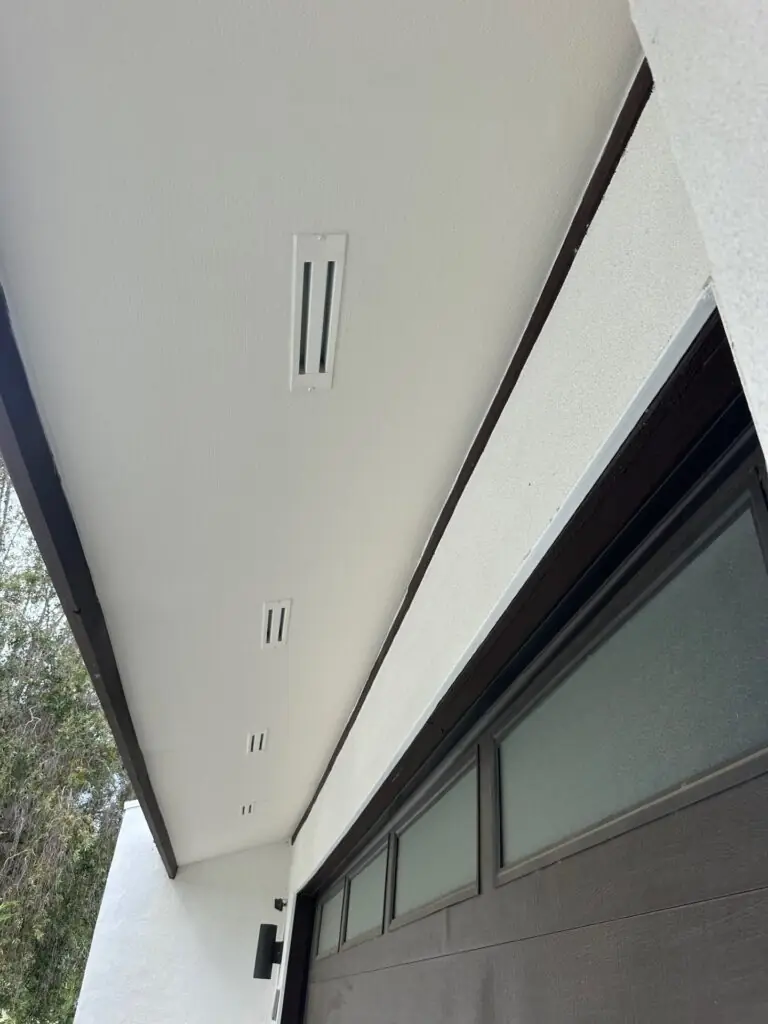
- Walk the house and list every vent. Include attic, soffit, gable, foundation, crawl space, dormer and ridge vents. Photograph each one.
- Check the mesh. If any vent has 1/4-inch screening, plastic or fiberglass mesh, or no screen, put it at the top of the list.
- Choose the right fix for each location. Metal mesh at 1/8 inch or finer is the minimum. Replace gable and eave vents with listed ember and flame-resistant vents where your budget allows. Look up listed products in the State Fire Marshal's Building Materials Listing.
- Keep paperwork. Save receipts, product listing numbers and dated before and after photos. Your carrier may ask for proof.
- Tell your insurer. Contact your agent or carrier once the work is done and ask how they credit vents under their filed program.
- Plan for cleaning. Fine mesh collects needles, leaves and dust. Check it each season, and especially before fire weather.
- Think in layers. Vents work best alongside a clear five-foot zone, clean gutters and an enclosed eave.
If you would like a second set of eyes, our free home hardening assessment covers vents, eaves and the other ember entry points, and you can read about our vents and gutters work. You can also email info@wetlinedefense.com.
Frequently asked questions
Are ember-resistant vents required on existing homes in California?
The wildfire building code is written mainly for new construction and rebuilds, and CAL FIRE presents vent upgrades on existing homes as a recommendation. Remodels, permits and local or HOA rules can change that, so check with your building department or fire district before you start.
Is 1/8-inch mesh good enough, or do I need 1/16-inch?
CAL FIRE and the Department of Insurance both describe 1/16 to 1/8 inch noncombustible metal mesh as acceptable for vent screening. The finer 1/16-inch mesh blocks more embers but clogs more easily, so it needs more frequent cleaning. For gable and eave vents, a listed ember and flame-resistant vent performs better than mesh alone.
Will new vents lower my home insurance premium?
They may earn a mitigation credit, because ember-resistant vents are part of the state's Safer from Wildfires framework. The amount depends on your carrier and policy, and your carrier sets final pricing. Contact them after the work is done and be ready to provide proof.
Sources
- 2025 Title 24 California Code Changes (Building Standards Commission, DGS)
- 2025 California Wildland-Urban Interface Code, Title 24, Part 7 (ICC)
- CAL FIRE Office of the State Fire Marshal Information Bulletin on vents and ASTM E2886
- Hardening Your Home (CAL FIRE, Ready for Wildfire)
- Wildfire Home Retrofit Guide (CAL FIRE)
- Vulnerability of Vents to Wind-Blown Embers: Executive Summary (IBHS)
- Fire-Resistant Vents (Fire Safe Marin)
- Safer from Wildfires (California Department of Insurance)
- FAQ: Safer from Wildfires Regulation (California Department of Insurance)
- Ember-Resistant Roof Vents: What California Requires (2026)
- California WUI Code (CWUIC) 2025, Title 24 Part 7 (Go Codebook)
- Defensible Space (Truckee Meadows Fire District)
- Wildland Fuels Division (Carson City Fire Department)
This article is general information, not insurance or legal advice. Your carrier sets final pricing and eligibility.

 By Will Spyrison