
By Craig Weeks
Founder, Chief Technical Designer · Updated November 15, 2026
If your roof is near the end of its life and your home sits in a California fire hazard severity zone, the replacement has to be a Class A assembly. The rules are more specific than that headline, though, and they differ a little between Los Angeles and Tahoe-area towns like Truckee. This guide walks through what the code says, what local building departments add, and how to avoid paying for a roof that passes inspection but still leaves gaps for embers.
A quick scope note: this article covers California jurisdictions. Nevada-side rules differ by county and city, so check with your local building department, and see our guide to Reno defensible space requirements for the Washoe County picture.
What the state code says about re-roofing in a fire zone
Class A is the top of the three-tier roof fire rating scale (A, B and C). FEMA's guide for builders in wildfire zones describes Class A as the greatest fire resistance within that range, and notes that tile, many metal products and some treated wood products can reach it when tested under ASTM E108 or UL 790.
For existing homes, the key text is in the California Residential Code, Section R902.1.1 in the 2022 edition. In a fire hazard severity zone, the entire roof covering must be at least Class A in three situations: when more than 50 percent of the total roof area is replaced within one year, on every new structure, and for any roof covering applied in the alteration, repair or replacement of an existing roof. Outside those zones, the same section sets a Class C minimum.
Read that third item carefully. In a mapped zone, even a repair has to use a Class A covering. The 50 percent line mostly decides something else: whether the whole roof has to be brought up to the new-construction standard. Code editions are updated on a three-year cycle, so ask your building department which edition and section number applies to your permit.
Los Angeles: what LADBS and the county add
If you are inside the City of Los Angeles (Pacific Palisades, Bel Air, Brentwood, Sherman Oaks and similar hillside neighborhoods), the Los Angeles Municipal Code is explicit for the Very High Fire Hazard Severity Zone: all buildings need a fire-retardant roofing assembly that meets the Class A definition, and wood shakes and shingles are not permitted.
The LADBS express permit bulletin says the same thing in permit language. Re-roofing with a Class A or B covering weighing less than 6 pounds per square foot is an express-permit item, but a Class A covering is required in the Very High zone. The bulletin also says that when you replace more than 50 percent of a residential roof, you need a cool roof product labeled and certified by the Cool Roof Rating Council. That is an energy rule, not a fire rule, but it affects which Class A product you can choose. Confirm the current bulletin with LADBS before you sign a contract.
LADBS also publishes a fire hazard severity zone checklist for plan review. It states that no wood shake or wood shingle covering is permitted, including fire-retardant-treated products, and calls for a Class A classification when tested under ASTM E108 or UL 790.
In unincorporated Los Angeles County (Altadena, Topanga and parts of the Santa Monica Mountains), the county's resilient rebuilding guidance says wood shingles and shakes are prohibited in any fire hazard severity zone regardless of classification. It also says to provide the ICC or UL evaluation report number of your chosen roofing material when you apply for a roofing permit. Your roofer should be able to hand you that number without hesitation.
Truckee and the Tahoe area: Class A on every new roof
The Town of Truckee's re-roofing guidance is straightforward. All new roofs, including additions, must have a Class A fire rating or be approved noncombustible material. If more than 50 percent of a roof is repaired or replaced in any 12-month period, the entire roof must be Class A. For coverings other than composition shingles or sheet metal, the Town asks for a Certificate of Compliance for the Class A roof covering. It normally requires three inspections on a re-roof, and a fourth if you build up the deck with new insulation.
The zone question is rarely in doubt here. The Truckee Fire Protection District says nearly all properties inside its boundaries are in the High or Very High zones, whether in a state or local responsibility area. If you own in Tahoe City, Kings Beach or South Lake Tahoe instead, confirm the rule with your own jurisdiction, since each adopts its own ordinances. Our Truckee location page lists the services we offer locally.
Class A by assembly, and the details that matter more than the label
Two roofs can both be labeled Class A and perform very differently once embers arrive. Some coverings earn the rating on their own. Others are Class A only "by assembly," meaning extra material has to go between the covering and the roof sheathing, and the installation instructions must be followed exactly. IBHS-based guidance from Fire Safe Marin says to check whether a product's rating is by assembly. If your roofer skips the specified underlayment, you may have a roof that is not actually Class A.
The Class A test itself looks at flame spread, how easily fire penetrates the roof, and how much the covering generates embers. It does not test the edges, valleys, vents or gutters, which is where many ember problems start. A few details to ask about:
- Tile roofs: FEMA recommends sealing gaps between tiles, installing bird stops at the eaves, and fully mortaring hips and ridges so debris and embers cannot collect underneath.
- Complex roofs: Fire Safe Marin notes that roofs with many horizontal-to-vertical intersections collect debris and embers, which can make even a Class A roof more vulnerable.
- Gutters: The IBHS Wildfire Prepared Home requirements call for noncombustible gutters and downspouts, regular debris removal, and noncombustible gutter guards. Debris in a gutter can be ignited by embers and put flames against the roof edge.
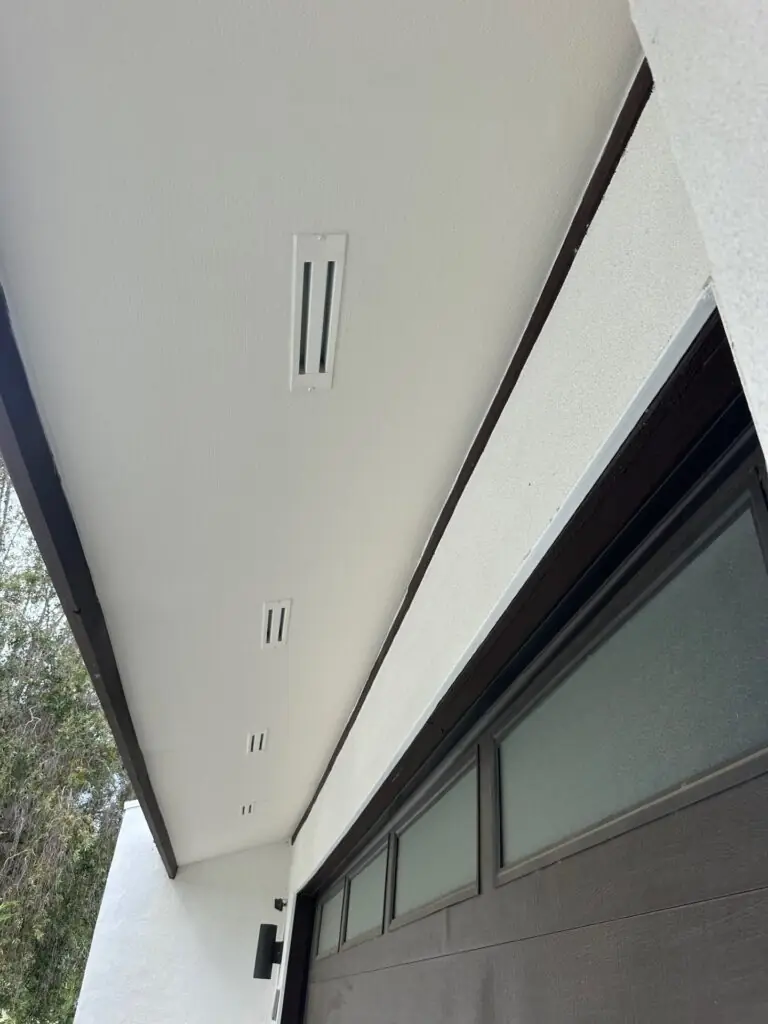
- Eaves: The same requirements call for enclosing the exposed underside of eaves with noncombustible soffit or siding material.
That is why a new roof is the best moment to fix the rest of the roofline. Our guides to how homes actually burn from embers and to ember-resistant vents explain why those openings matter as much as the shingles.
Class A and your insurance
The California Department of Insurance lists a Class A roof as one of the steps in its Safer from Wildfires program. The department notes that most roofs qualify, including asphalt shingles, concrete, brick or masonry tiles, and metal shingles or sheets, and that wood shake is not Class A. It also points to the State Fire Marshal's list of tested and approved materials.
The California FAIR Plan's published hardening discounts also include a Class A roof among its structure-level discounts. Outside the FAIR Plan, the size of the credit varies. A review of filed discounts by the nonprofit Insurance for Good found Class A roof discounts ranging from less than 1 percent to 5 percent depending on the insurer, and observed that most California homes already have a Class A roof. The same review gives an example of how a carrier combined two 5 percent discounts into 9.75 percent rather than a flat 10 percent.
In plain terms: a new Class A roof is mainly about protecting the house and keeping your permit clean, and any premium credit may be modest. Your carrier sets final pricing, so ask what it recognizes and what documentation it wants. The IBHS Wildfire Prepared Home designation also requires a Class A covering, and our Wildfire Prepared Home guide covers how that fits in.
What this means for your home
- Find out your zone first. Check your address on the state and local fire hazard severity zone maps, then confirm with your building department before getting quotes. The zone decides which fire rule applies.
- Identify your current roof. If it is untreated wood shake, it is not Class A and will need to be replaced with a different material. If it is asphalt shingle, tile or metal, it may already qualify. Keep the product documentation.
- Ask for the listing. Request the ICC or UL evaluation report number, and the assembly details if the product is Class A only by assembly. Make sure the contract names the underlayment.
- Watch the 50 percent line. Splitting a re-roof into phases to avoid it is rarely worth the risk, since repairs in a fire zone still have to be Class A. Ask your building department how it counts the area.
- Budget for the edges. Include noncombustible gutters with guards, bird stops or mortared tile edges, enclosed eaves and ember-resistant vents in the same scope of work.
- Document everything. Keep the permit, final inspection sign-off, product listings and dated photos. Send them to your insurance agent and ask how they affect your policy.
- Maintain it. A Class A roof still needs clearing. Remove leaves and needles from the roof, valleys and gutters on a regular schedule.
If you want a second set of eyes on the roofline, vents, eaves and the first five feet around the house, request a free home hardening assessment or email info@wetlinedefense.com. We can also help with vents and gutters so they match your new roof. We are not an insurance agent or a building department, so confirm code questions with your jurisdiction and pricing questions with your carrier.
Frequently asked questions
Do I need a Class A roof if my home is outside a mapped fire zone?
Not necessarily under the state code. The residential code sets a Class A minimum inside fire hazard severity zones and a Class C minimum in all other areas. Local rules can be stricter, and Class A is widely available, so many homeowners choose it anyway. Confirm with your building department.
Can I repair part of a wood shake roof without replacing it all?
In a fire hazard severity zone, any roof covering applied in a repair has to be at least Class A, and wood shakes and shingles are prohibited in Los Angeles fire zones, including treated ones. Replacing more than half the roof in a year can also require the whole roof to be Class A. Ask your building department before you start.
Will a new Class A roof lower my premium?
It might, but do not count on a specific amount. The California Department of Insurance lists a Class A roof as a recognized step in Safer from Wildfires, and the FAIR Plan includes it among its discounts. Filed credits vary by carrier, and your carrier sets final pricing, so ask before you decide.
Sources
- California Residential Code 2022, Chapter 9 Roof Assemblies (R902.1.1)
- California Department of Insurance: Safer from Wildfires
- LAMC Sec. 91.7207, Special requirements for the Very High Fire Hazard Severity Zone
- LADBS Information Bulletin, Express Permits
- LADBS Fire Hazard Severity Zone Supplemental Checklist
- Los Angeles County Resilient Rebuilding: Resources for Design and Building Professionals
- Town of Truckee: Re-roofing Permit and Inspection Requirements
- Truckee Fire Protection District: Fire Hazard Severity Zones
- FEMA P-737 Builders Guide to Construction in Wildfire Zones
- Fire Safe Marin: Fire-Resistant Roofs
- IBHS Wildfire Prepared Home requirements (Washington Insurance Commissioner brochure)
- California FAIR Plan: Wildfire Hardening Discounts for Dwelling Fire and Commercial Policies
- Insurance for Good: Do California Insurers Reward Wildfire Resilience?
This article is general information, not insurance or legal advice. Your carrier sets final pricing and eligibility.
 By Will Spyrison