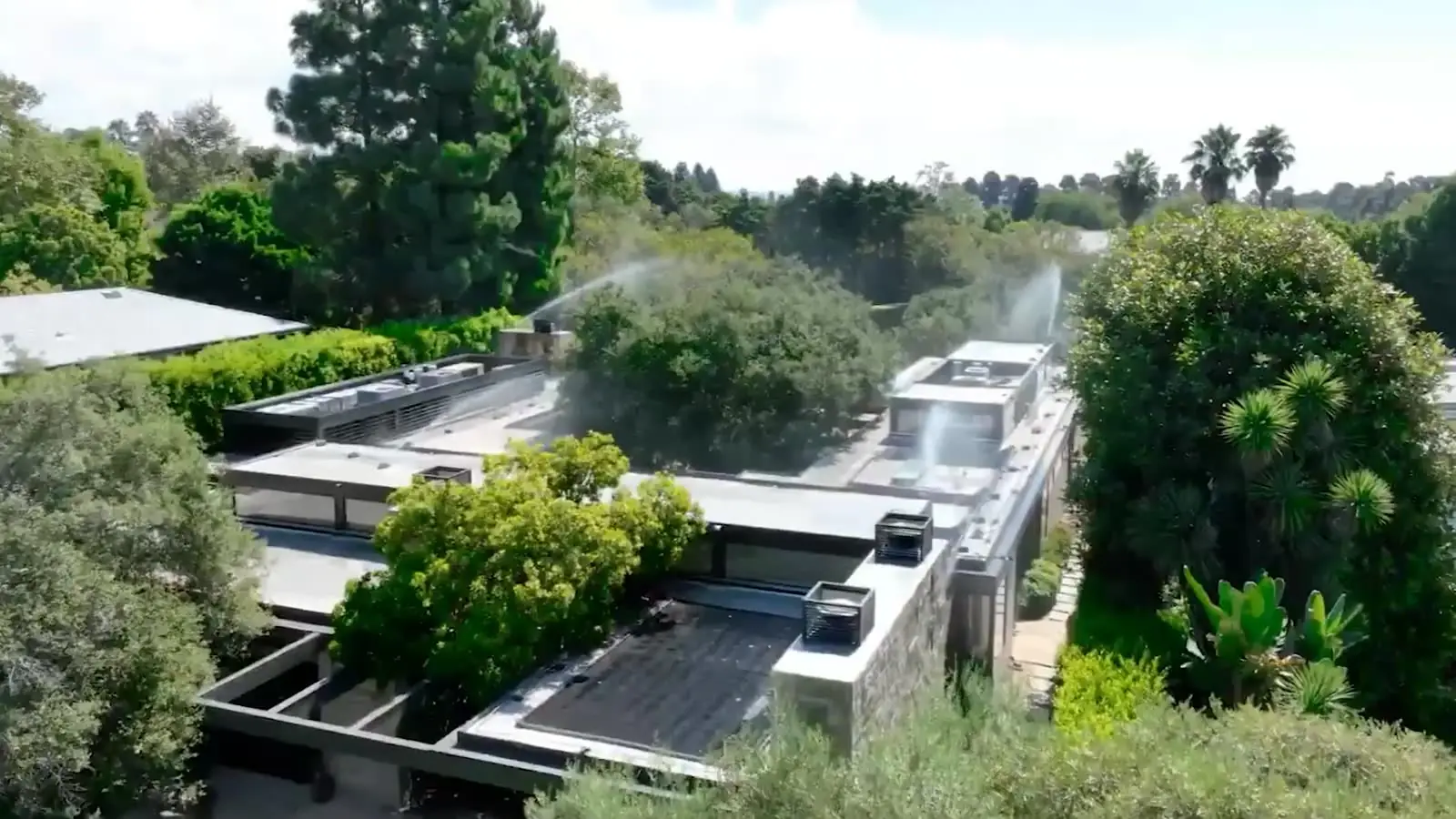
Exterior wildfire sprinklers have become one of the most asked-about upgrades in fire country, especially after recent Los Angeles fires. Done well, they keep a roof, eaves and the ground around a home wet through hours of ember fall. Done poorly, they fail the moment the power or water goes out.
Here is what separates a real system from a false sense of security.
1. The water supply has to be yours
During a major fire, municipal water pressure can drop as hydrants and systems are overwhelmed. A sprinkler system that depends on the city supply may not perform when you need it most.
Reliable systems draw from a dedicated source:
- A pool, connected with its own intake and pump
- A dedicated tank, commonly 5,000 to 30,000 gallons, above or below ground
Tank size depends on the number of heads, flow rate and how long you need the system to run.
2. Power has to be independent
Utilities often shut off power ahead of or during fires. A system needs its own pump and power source to keep running when the grid is down.
3. Hardware has to survive the heat
Plastic pipe and fittings soften and fail under radiant heat. Wetline systems use copper supply lines and brass heads, placed to keep working when it's hot.
4. Activation can't depend on you being home
Most homes are lost after evacuation. Good systems start automatically from heat and ember sensors, and can also be started remotely from an app.
5. Retardant extends your water
Plain water evaporates quickly in fire conditions. Wetline systems mix in a biodegradable Class A retardant that cools surfaces far faster than water alone and extends usable water by roughly half, so a tank lasts longer.
Coverage and design
Each head can wet up to about 60 feet. A designer maps roof planes, the direction of prevailing winds and the vegetation around the home. Heads can usually be hidden behind parapets and rooflines.
| Question | What to look for |
|---|---|
| Water source | Pool or dedicated tank, not city only |
| Power | Independent pump and power |
| Hardware | Copper and brass, no exposed plastic |
| Activation | Sensors plus remote control |
| Maintenance | Seasonal testing and logs |
Maintenance matters
A system that hasn't been tested is a guess. Seasonal checks of pumps, sensors and water levels are what make it reliable, which is why many clients pair sprinklers with 24/7 monitoring.
What insurers think
Sprinklers aren't on every insurer's discount list, but a documented, off-grid system is a strong signal in a broker's submission, especially alongside the basics like ember-resistant vents.
Learn more about our autonomous sprinkler systems or get an estimate.
Frequently asked questions
Do wildfire sprinklers really work?
Systems with an independent water supply, independent power and heat-resistant hardware can keep roofs and surroundings wet during an ember storm. Systems that rely on city water and grid power may fail when needed most.
How big a tank do I need?
Common tanks range from about 5,000 to 30,000 gallons, sized to the number of heads, flow rate and how long the system needs to run.
Are wildfire sprinklers allowed in my city?
Most cities allow them, but tanks and plumbing may need permits. We handle permitting as part of the install.