California regulators are pressing mortgage lenders to explain how they have handled insurance money owed to survivors of the January 2025 Los Angeles fires. The order came on Thursday, Oct. 15, 2026, and trade coverage this week shows the reporting requirement is now moving through the lending industry. If you are rebuilding in the Palisades, Altadena or nearby, it is worth understanding how your claim money reaches your builder.
What the state ordered
On Oct. 15, California officials ordered mortgage lenders, including banks and credit unions, to report on how they have handled insurance payouts to survivors of the 2025 Los Angeles-area fires. The order came from the Business and Consumer Services Agency and the Department of Financial Protection and Innovation (DFPI). The state gave lenders two weeks to submit their reports, so responses are due in late October.
Gov. Gavin Newsom also wrote to bankers' associations and credit unions. He said fire victims who are rebuilding reported that lenders sometimes hold on to payouts for weeks before releasing them. He directed the state to collect data on lenders that take longer than 10 days to distribute insurance proceeds and do not develop a plan to speed things up.
What lenders must disclose
According to a trade report published Oct. 20, the inquiry followed more than 160 complaints about insurance disbursements since January 2025. Regulators are looking at delayed payments, access to timely appeals, and cases in which insurance money allegedly stayed with a lender after the loan was fully repaid.
The reports themselves are detailed. Institutions must explain the proceeds they received, the amounts released, the timing of disbursements, and the reasons any funds were still withheld as of Sept. 30. DFPI Commissioner KC Mohseni said the department will take action, potentially including fines, against banks and credit unions that unnecessarily delay insurance payouts.
This is a data-gathering step, not a finding against any particular lender. Many lenders may show they released funds promptly. The point of the exercise is to find out where the delays are.
Why it matters for rebuilding
Insurance money is only one piece of the rebuilding puzzle, but it is the piece that pays contractors. The scale of the claims is large. As of May, the Department of Insurance's tracker showed 38,835 claims filed across all insurers tied to the Los Angeles fires. When a mortgage is involved, the check often passes through the lender before it reaches you.
That creates a gap. One trade publication noted that an insurance settlement and the cash available to fund construction can be different amounts at different points in the rebuilding process. A claim can be approved on paper while your builder is still waiting for the next draw.
Time is also a factor. An independent analysis of city and county permit records found that applications filed in early 2026 waited about 134 days for a permit in the Palisades and 199 in Altadena. That analysis is from a private publisher, not an agency, so treat the numbers as a snapshot. Still, a slow permit followed by a slow draw can stretch a rebuild schedule, and that can affect how long you pay for temporary housing.
There is a financing option for some survivors as well. The California Housing Finance Agency (CalHFA) began accepting reservations Sept. 16 for a program aimed at eligible disaster survivors. Check CalHFA directly to see whether you qualify.
Where hardening fits
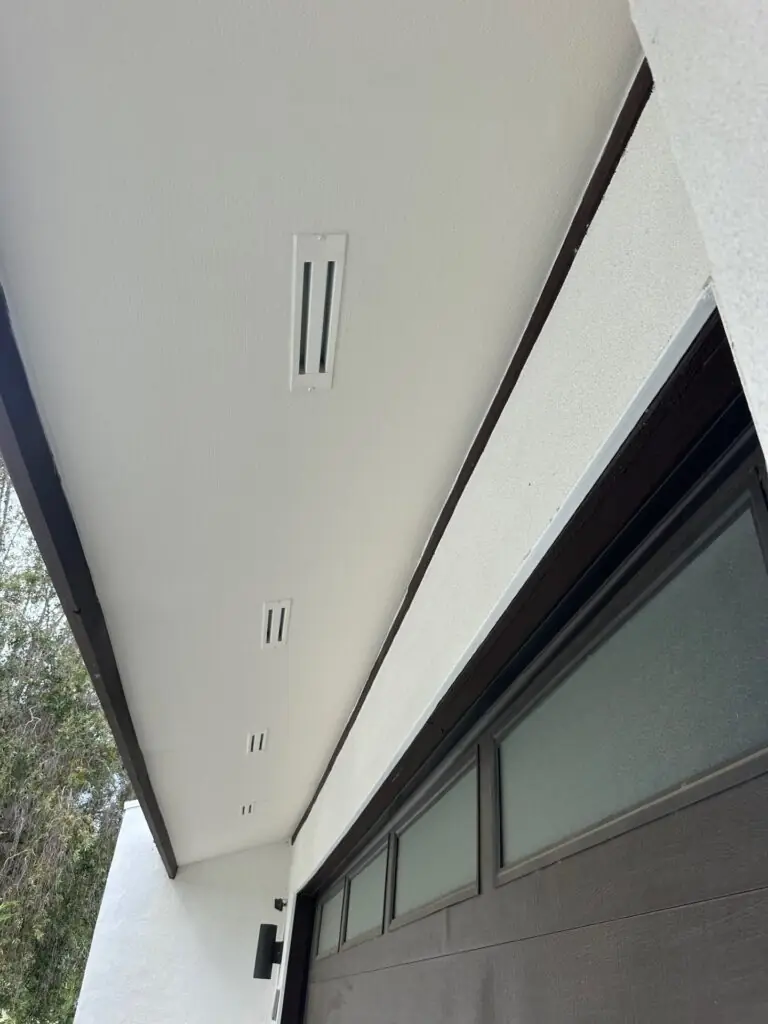
Homes rebuilt after the fires have to meet current rules. One summary of the process notes that like-for-like rebuilds skip current zoning rules but must meet current building and fire codes. The ember-resistant details in those codes, such as vents, eaves and exterior finishes, are easiest to build in from the start. Our guide to rebuilding after the Palisades and Eaton fires covers that sequence.
Coverage can also depend on those details. In September, the Department of Insurance reported that State Farm General filed a rule application to resume accepting new homeowners applications and committed to write homes that meet the IBHS Wildfire Prepared Home Enhanced standards. Your carrier sets final pricing and eligibility, and nothing here guarantees a policy or a discount. Documenting your hardening work gives you something concrete to show an underwriter. Our page on the Wildfire Prepared Home program explains the standard.
What this means for your home
If you are rebuilding in Pacific Palisades or Altadena, or your claim money is held by a mortgage servicer, consider these steps:
- Ask your servicer for its disbursement process in writing. Request the timeline for releasing proceeds, how draws are scheduled and who handles appeals.
- Keep a dated log. Record when your insurer issued each payment, when the lender received it and when you received it. Dates matter if you later need to raise a complaint.
- Escalate if funds stall. If money has been held for weeks without explanation, contact your lender's loss draft department first. You can also contact DFPI, which is the agency gathering this information.
- Match your builder's draw schedule to your lender's. A mismatch is a common source of delay.
- Budget for hardening early. Ember-resistant vents, noncombustible finishes and window upgrades cost less to install during construction. Ask your builder to list them as separate line items so they are documented.
- Get a second set of eyes. A free home hardening assessment can help you decide what to build in now and what to add later. We are not an insurance agent or a law firm, so confirm coverage questions with your agent and legal questions with an attorney.
Frequently asked questions
Does this order change how my insurer pays my claim?
No. The order targets mortgage lenders and servicers, not insurers. It asks them to report how they have handled proceeds. Your claim rights and your insurer's duties are unchanged.
Will lenders have to release my money faster?
Not automatically. The state is collecting data, and officials have said they may take action, including fines, against lenders that delay payouts without good reason. The practical effect for you will depend on your lender and what the reports show.
Is this only for people who lost their home?
The order covers payouts to survivors of the 2025 Los Angeles-area fires. Whether it applies to your situation depends on your loan and your claim. If you are unsure, ask your servicer how your proceeds are being handled and keep written records of the answer.
Sources
- California orders lenders to report handling of insurance payouts to fire survivors (Associated Press via ABC News)
- California orders lenders to report on their handling of insurance payouts to LA fire survivors (Associated Press)
- California Probes Lenders Over Delayed Wildfire Insurance Payouts (National Mortgage Professional, Oct. 20, 2026)
- Servicers face new California insurance reporting requirement (National Mortgage News)
- California takes legal action against State Farm after investigation finds widespread mishandling of LA wildfire claims (California Department of Insurance)
- Major California home insurers move to reopen for new business (California Department of Insurance, Sept. 18, 2026)
- Palisades and Altadena Fire Rebuild: Insurance and Contractors (Renology)
- Rebuilding After the 2025 LA Fires: Permits and Options
This article is general information, not insurance or legal advice. Your carrier sets final pricing and eligibility.