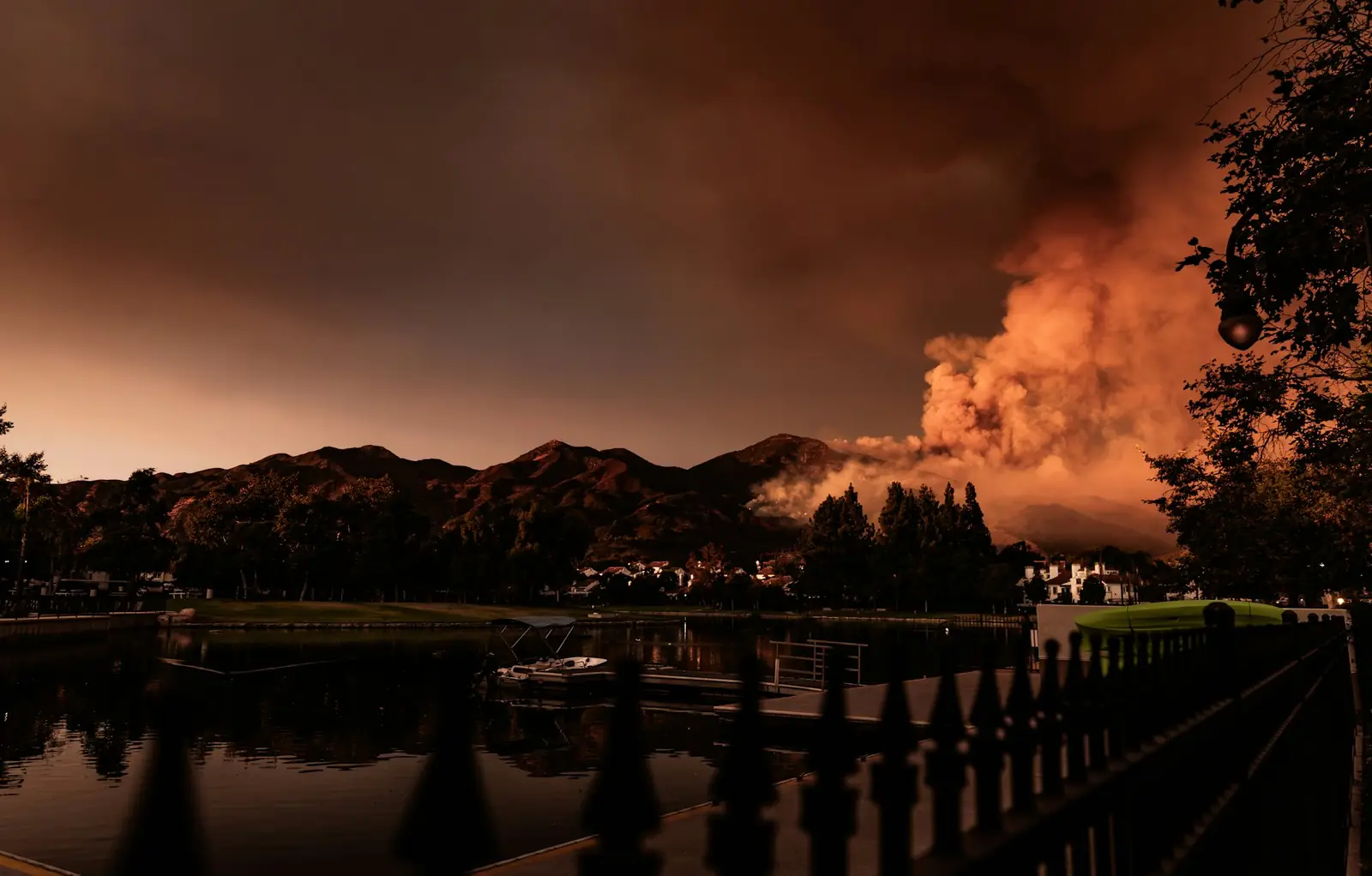
On October 29, 2026, trade publication Insurance Business reported on new National Association of Insurance Commissioners (NAIC) figures showing how heavily the January 2025 Los Angeles fires weighed on the national homeowners market. California insurers incurred about $1.70 in direct losses for every dollar of premium they earned in 2025, according to the report. The numbers land five days before Californians vote for a new insurance commissioner on November 3.
What the new figures show
The report draws on the NAIC's 2025 market share data. <br>
For California, homeowners insurers incurred about $1.70 in direct losses per premium dollar. Nationally, the figure was about 55 cents. By Insurance Business's own calculation, California produced 9.2% of US homeowners earned premium but about 28% of the losses, roughly $28.2 billion, on a loss ratio of 169.6%. Take California out, and the countrywide loss ratio falls from 55.1% to about 43.6%.
Most of that traces back to January 2025, when the Palisades and Eaton fires swept through Los Angeles County. The report also cites the California Department of Insurance wildfire claims tracker, which shows $22.4 billion paid on 42,121 claims. That total includes businesses, living expenses and vehicles, plus the FAIR Plan and surplus lines writers, so it does not match the NAIC homeowners line exactly. It does give a sense of scale.
Why a past fire year still shapes your policy today
A loss ratio is an industry-wide measure. It does not tell you what your own premium will do, and your carrier sets final pricing. But it helps explain why insurers keep leaning on forward-looking catastrophe models and higher rates in fire country.
The California FAIR Plan, the state's insurer of last resort, shows the pressure clearly. An overall increase of about 29% took effect October 15 for new and renewal policies. KQED reported the plan has more than 675,000 customers, and that those in high wildfire risk areas may pay significantly more, while some lower-risk policyholders may pay less. If you want the details, our earlier piece on the FAIR Plan rate increase covers how the plan works.
Separately, a Stanford study released in June found California homeowners premiums are up 84% since 2020.
Where the private market stands
The state's Sustainable Insurance Strategy is meant to bring carriers back. The Department of Insurance says it requires insurers to write more policies in wildfire-distressed areas and to reverse the growth of the FAIR Plan. In a July 23, 2026 alert, the department said 11 homeowners insurance groups had committed to grow in California, and that USAA would expand access for more military families effective January 2027.
The pace is still debated. CalMatters reported in September that insurers' estimated new policy commitments totaled 12,189 since January 2025. A consumer advocate quoted there called that number "minuscule" next to the size of the FAIR Plan, which continues to grow, though more slowly. The department's own May data showed the plan adding about 16,000 residential policies in the first quarter of 2026, about 2.4% growth, down from 35,000 to 50,000 per quarter from 2024 through September 2025.
In short, there are signs of stabilization, but a homeowner in a high-risk ZIP code should not assume a standard policy will be easy to find.
What hardening has to do with the loss numbers
Insurers price on expected losses, and building features change expected losses. In March 2026, the California Department of Insurance and the NAIC released an analysis of the Palisades and Eaton burn areas. It found that rebuilding to the IBHS Wildfire Prepared Home standard could reduce projected wildfire losses by one-third on average. The IBHS designation covers roof protection, building features and defensible space, with a Base tier focused on ember defense and a Plus tier adding protection against radiant heat and direct flame.
That is a modeling result for whole neighborhoods, not a promise about any one policy. Still, it shows why regulators and carriers keep pointing to mitigation. Our guide to the Wildfire Prepared Home designation explains the tiers.
A note for Tahoe and Nevada readers
Nevada has no FAIR Plan equivalent. E&E News reported that the state lacks a state-chartered insurer required to cover residents who cannot buy private coverage. Under AB 376, which took effect January 1, 2026, insurers may exclude wildfire from standard policies, though the Nevada Division of Insurance has said a carrier would need to file new forms and rates for review first. If you are near Incline Village, Zephyr Cove or Reno, read your policy's wildfire language closely at renewal.
What this means for your home
The data points to a market that is still repairing itself. Here are practical steps you can take now.
- Read your renewal. Check your dwelling limit, deductible, wildfire terms and any new fees. Ask your agent or broker what changed and why.
- Document your home. Take dated photos of your roof, vents, siding, windows, fencing and the first five feet around the house. Keep receipts for any upgrades.
- Ask your carrier what it recognizes. Ask whether it offers a mitigation discount or credit, and what proof it wants. Discounts and eligibility vary by carrier, and your carrier sets final pricing.
- Fix the common ember entry points first. Vents, gutters, the roof edge, window glazing and combustible material against the walls are usual weak points. Our home hardening assessment is a free way to see what applies to your property.
- Shop the market, with care. If you are on the FAIR Plan, ask an independent broker whether a standard policy is available, and compare coverage, not just price. The Find Savings tool can help you see which upgrades and documentation may be worth discussing with your carrier.
- Plan upgrades in a sensible order. Our guide on lowering home insurance in a fire zone walks through the steps and the paperwork.
Wetline is not an insurance agent, so we cannot tell you what a carrier will offer. We can document the work so you have something concrete to show your carrier.
Frequently asked questions
Does a 169.6% loss ratio mean my premium will rise by that much?
No. The loss ratio compares total losses with total premium across California's homeowners market in 2025. It is context for why insurers want higher rates and tighter underwriting, not a formula for your bill. Your carrier sets final pricing, and rate changes go through state review.
Can home hardening help me find or keep coverage?
It may. State modeling suggests hardened homes have lower expected losses, and many carriers consider mitigation when underwriting. The effect varies by carrier, location and the home itself, so ask your carrier or broker what they recognize and keep documentation of every upgrade.
I am on the FAIR Plan. Should I stay?
That depends on what else is available to you. The FAIR Plan can be a necessary safety net, but it is not designed to replace a standard policy. Ask an independent broker what private options exist for your address, and compare what each policy covers before you switch.
Sources
- California's fire year drove 28% of all US homeowners losses, and next commissioner inherits fallout (Insurance Business)
- California FAIR Plan Announces 29.1% Rate Hike for Homeowners This Fall (KQED)
- California FAIR Plan to raise homeowners insurance rates about 29% (KRCR)
- Insurance surge expanding options for Californians in wildfire distressed areas (California Department of Insurance, July 23, 2026)
- Sustainable Insurance Strategy (California Department of Insurance)
- Insurers say they're starting to write new California homeowner policies, but how many? (CalMatters)
- Momentum continues to build under Insurance Commissioner Ricardo Lara's Sustainable Insurance Strategy (California Department of Insurance, May 1, 2026)
- Landmark study shows rebuilding Los Angeles to wildfire safety standards could slash future fire losses (California Department of Insurance, March 27, 2026)
- California's home insurance crisis is spreading beyond wildfire country (Stanford Doerr School of Sustainability)
- This Western state allows insurers to skip wildfire coverage (E&E News)
- New law allows insurers to exclude wildfire from policies (Tahoe Daily Tribune)
This article is general information, not insurance or legal advice. Your carrier sets final pricing and eligibility.